Systems built around the way organizations actually work.
Not a feature list. The people, the decisions, the exceptions and the responsibilities that make each one different.
Universal Awareness Fellowship
One connected system for an organization I help operate.
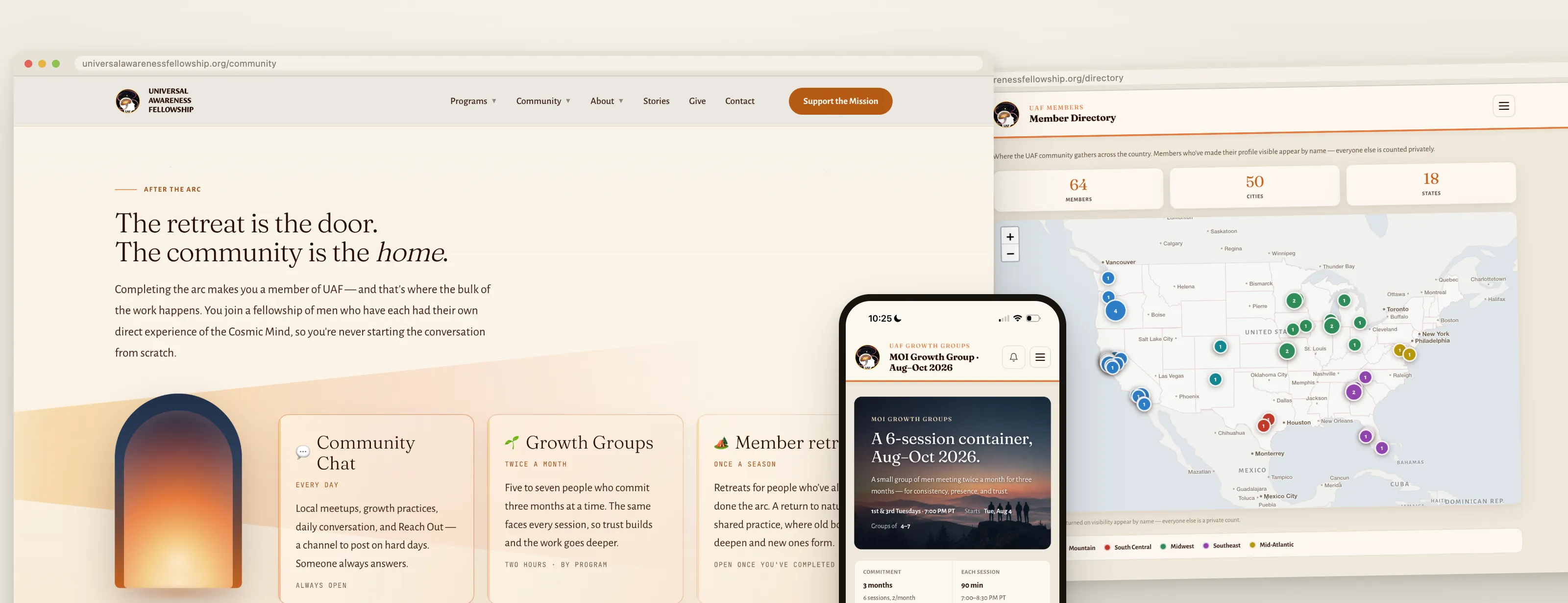
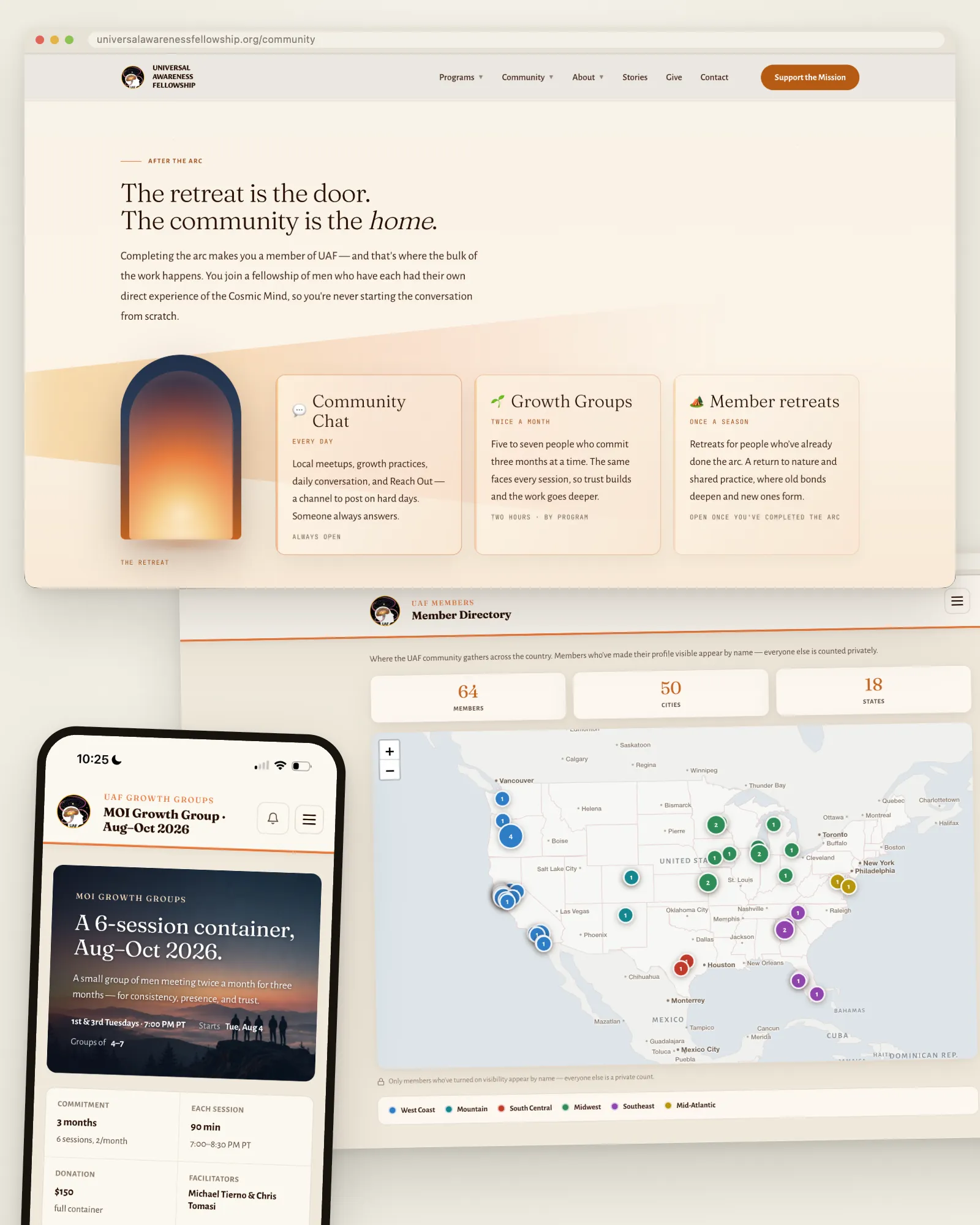
UAF is the clearest example of how I work because I did not enter as an outside developer. I help operate the organization. I lived inside the friction, then designed and built the systems that removed it.
The Journey
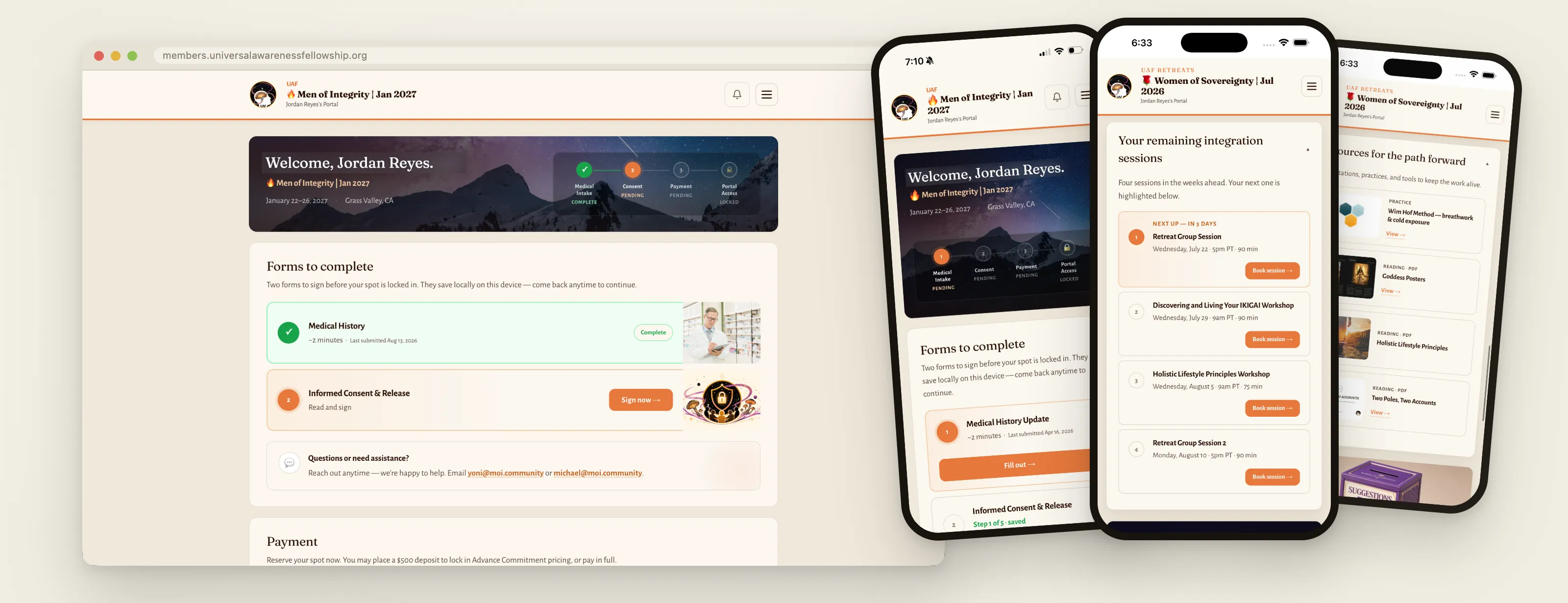
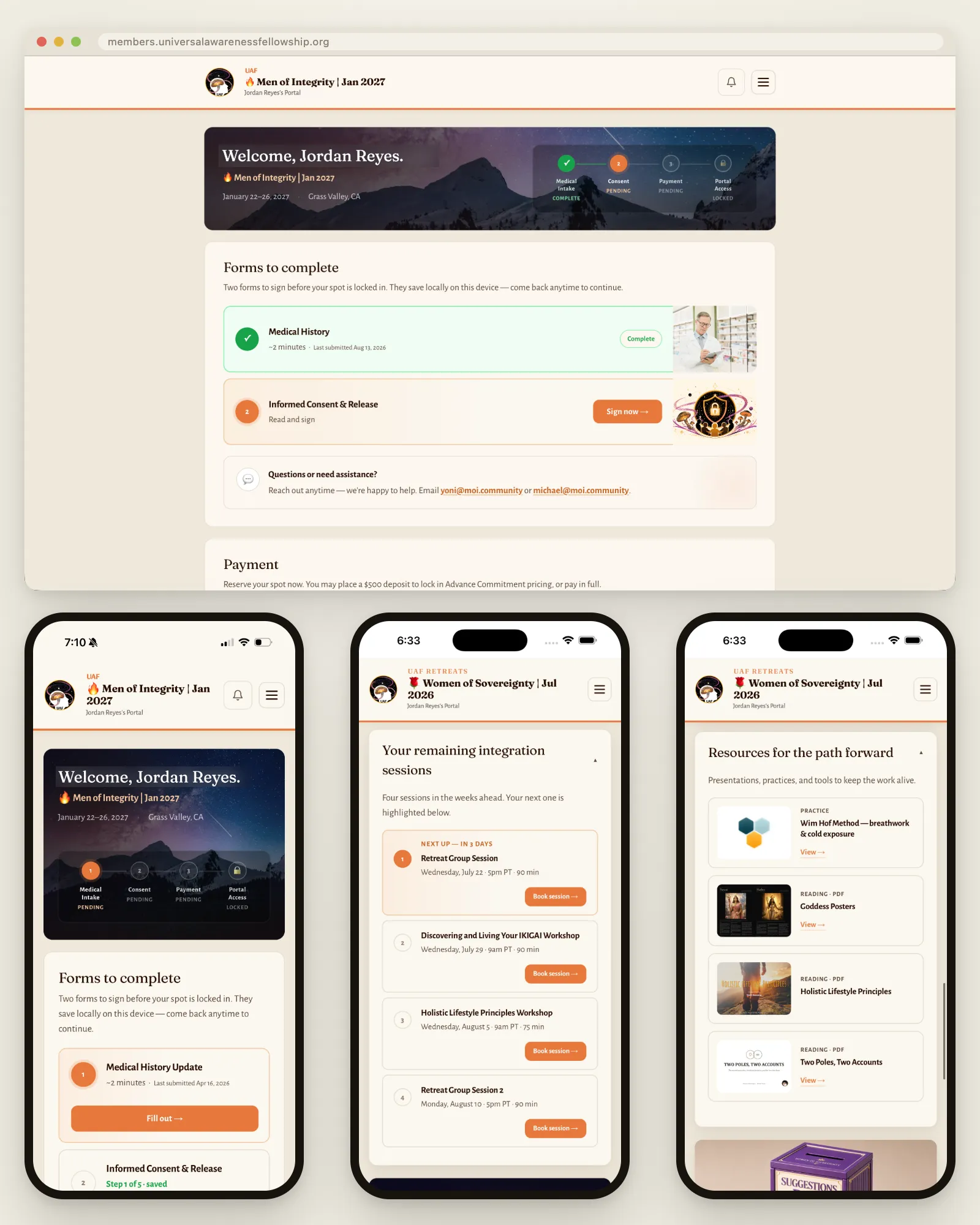
One state. Two very different views of it.
Behind the Journey
Access is not a job title. It is your role and whether you are on this retreat.
Five of eleven staff shown. The two facilitator entries are the same person on two different retreats — intake forms and emergency contacts open for the one they are facilitating, closed for the one they are not.
The “Needs You” queue only shows a person what they own. A daily digest makes the gaps visible.
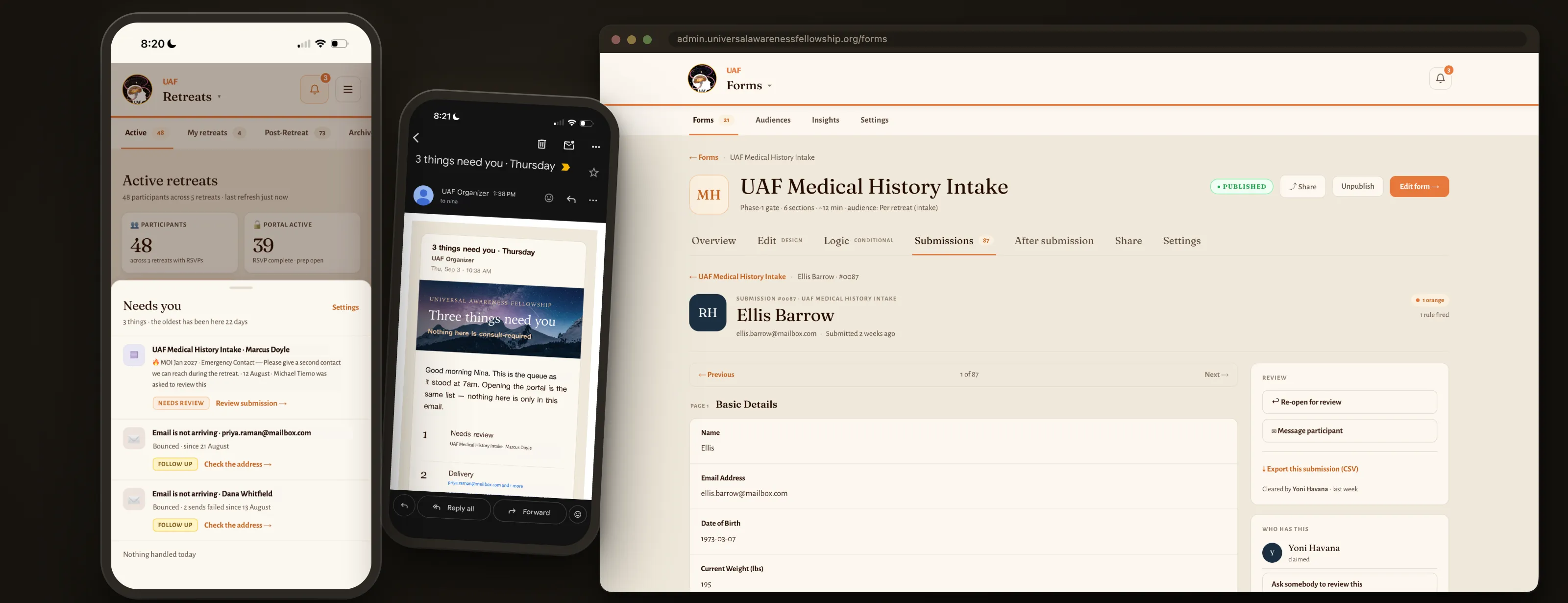
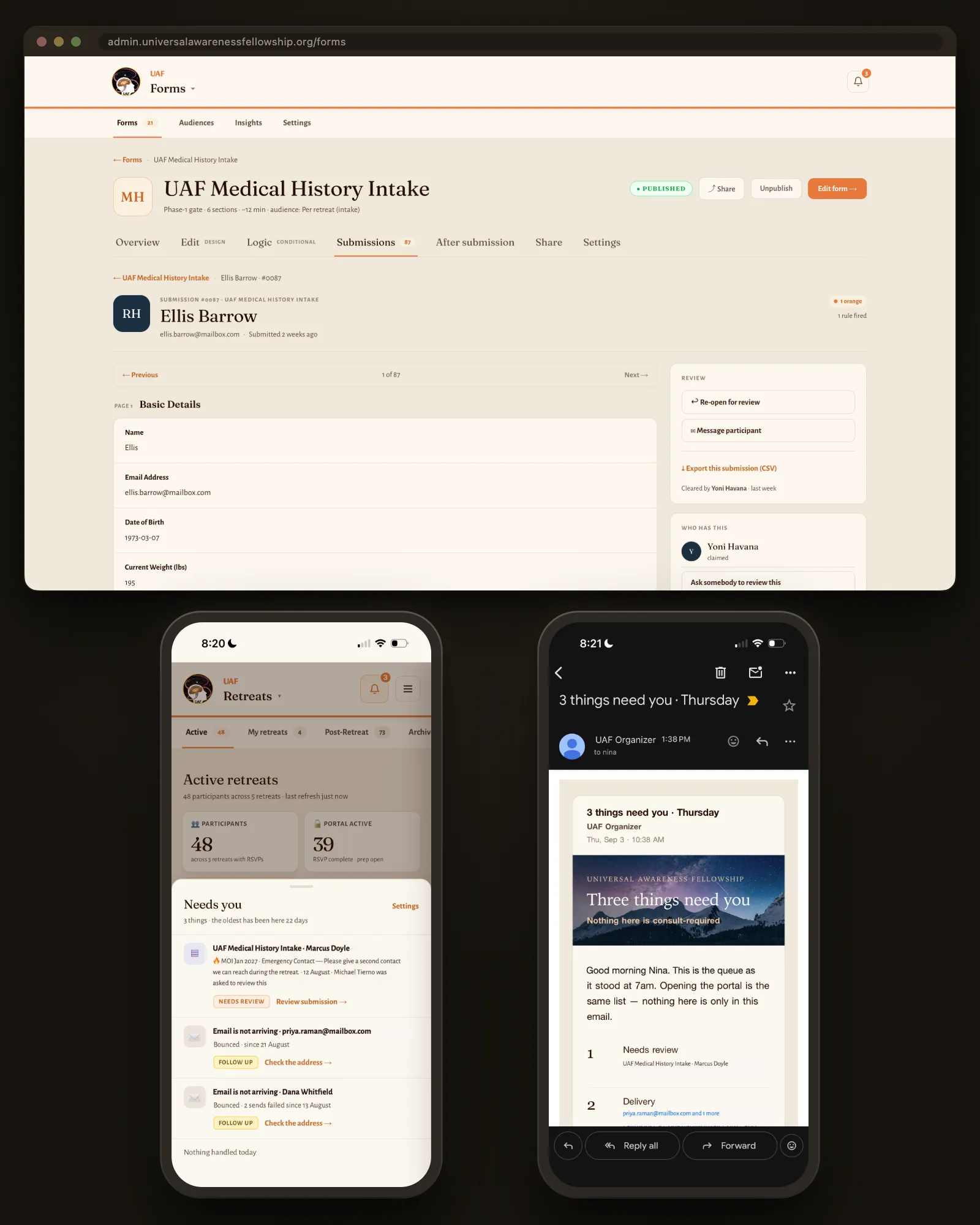
The system knows what needs to go out.
Nobody keeps a mailing list up to date by hand, and nobody remembers to chase a form. The system already knows who is where, so it does both.
A form still unsigned. A payment coming due. A retreat three weeks out. It recognizes the situation and triggers the appropriate communication.
Rather than a saved list going stale, it asks the question fresh at the moment of sending. Nobody adds or removes anybody.
If a detail moves between writing and sending, it pauses and asks a person rather than send something slightly wrong.
A complete email platform with its own audience management, built into the system rather than sitting beside it.
And it works the same whether the list holds two hundred people or two hundred thousand.
One Source of Truth
Change one thing, and everything downstream already knows.
Watch one signature travel. Nobody copies it anywhere, nobody is told to act on it, and nothing waits for a Monday meeting.
One signature. Four other things become true, and nobody was asked to make them true.
That is the difference between a shelf of tools that each need managing, and one system that runs the organization.
Most of this work is work that stops existing.
Every organization running programs has somebody doing these five things by hand, usually in a spreadsheet, usually the person you can least afford to lose.
Membership, segments, who unsubscribed. The system answers the question fresh each time it sends.
Unsigned forms, deposits coming due, sessions to book. Chased on schedule, without anybody deciding to.
A payment, a signature, an address. Entered once, and everything downstream already knows.
Ownership is named up front, so a gap has a person attached to it before it becomes a problem.
The operation survives that person taking a holiday, and survives them leaving.
Built ahead of UAF’s growth, to support hundreds of members without rebuilding the system underneath it. The same architecture can scale to hundreds of thousands.
Built for Reality
The strongest proof shows up when real people use the thing and something is quietly wrong.
Fifteen participants looked like they had never signed consent.
Some submissions were filed under a partner’s email address.
The discrepancy surfaced, and identity matching was corrected.
Reminders were only going out for some of the retreats that existed.
It recognized two retreats when eight existed in the platform.
Rebuilt around the underlying data — eleven missed reminders recovered immediately.
One-time sign-in links were being consumed before recipients opened them.
iOS preview fetches were opening the link on arrival. Traced, not reported.
Every email now carries a one-time code alongside the link.
Beyond the Program
A retreat ends. The relationship does not.
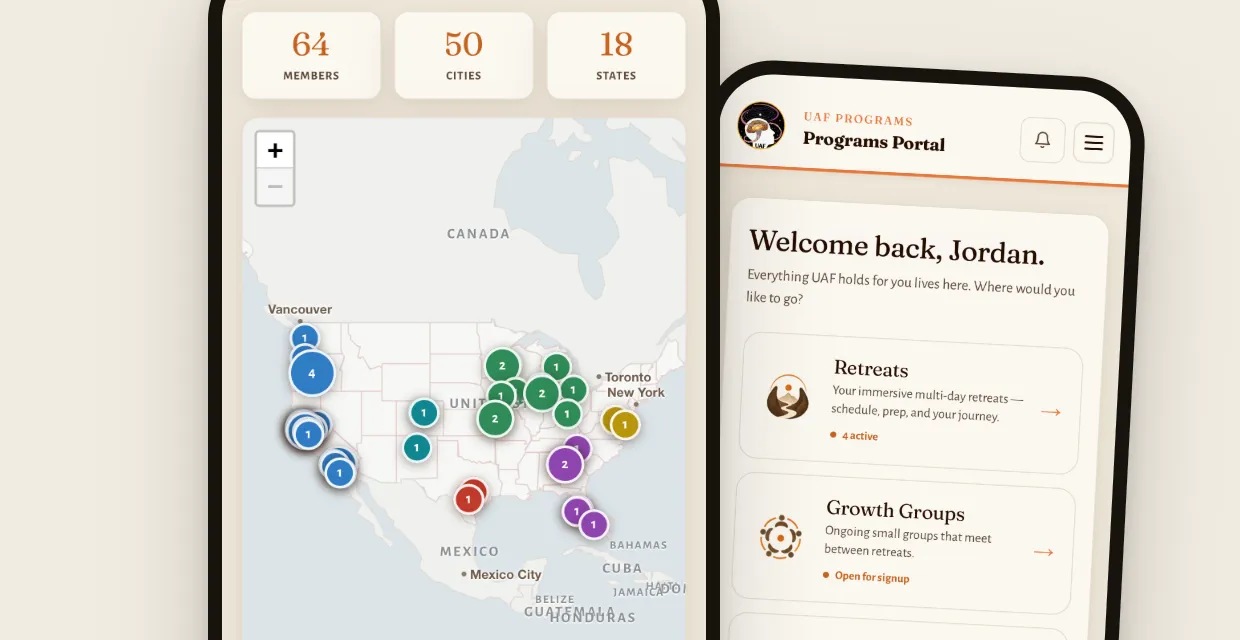
The digital system carries the relationship forward instead of treating each event as a disconnected transaction.
Everywhere It Needs to Be
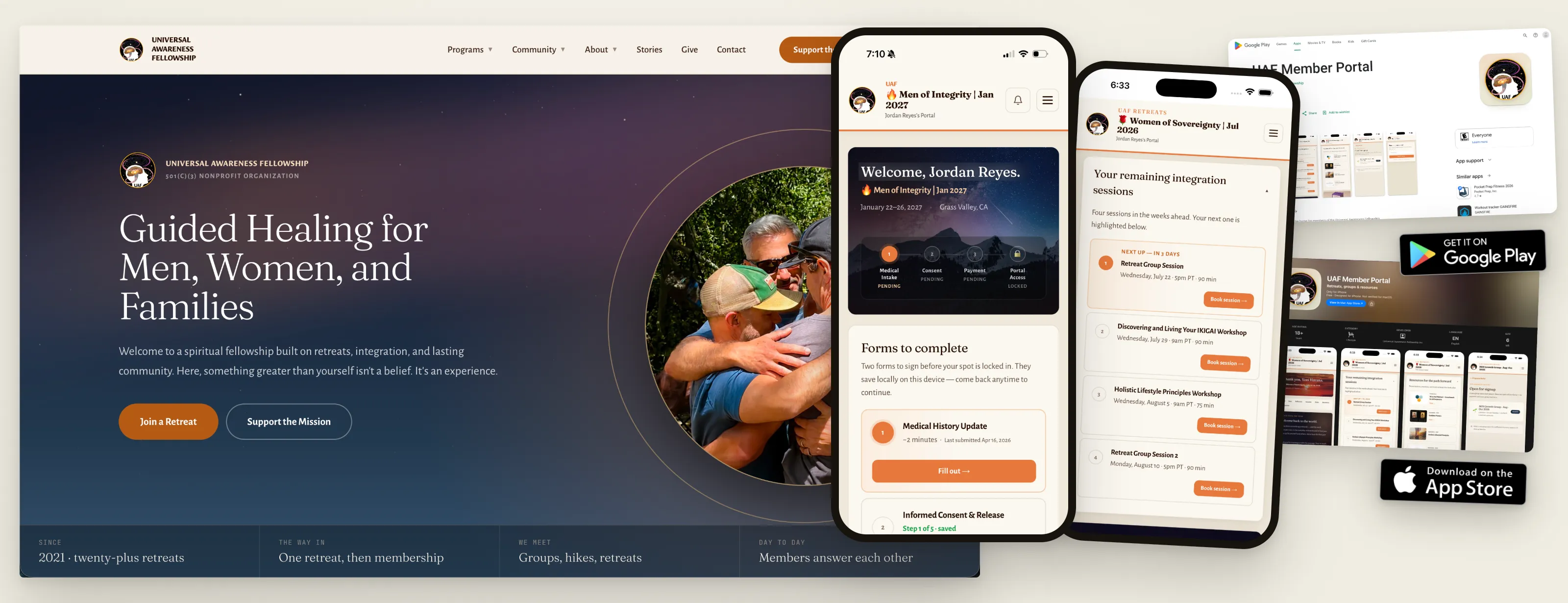
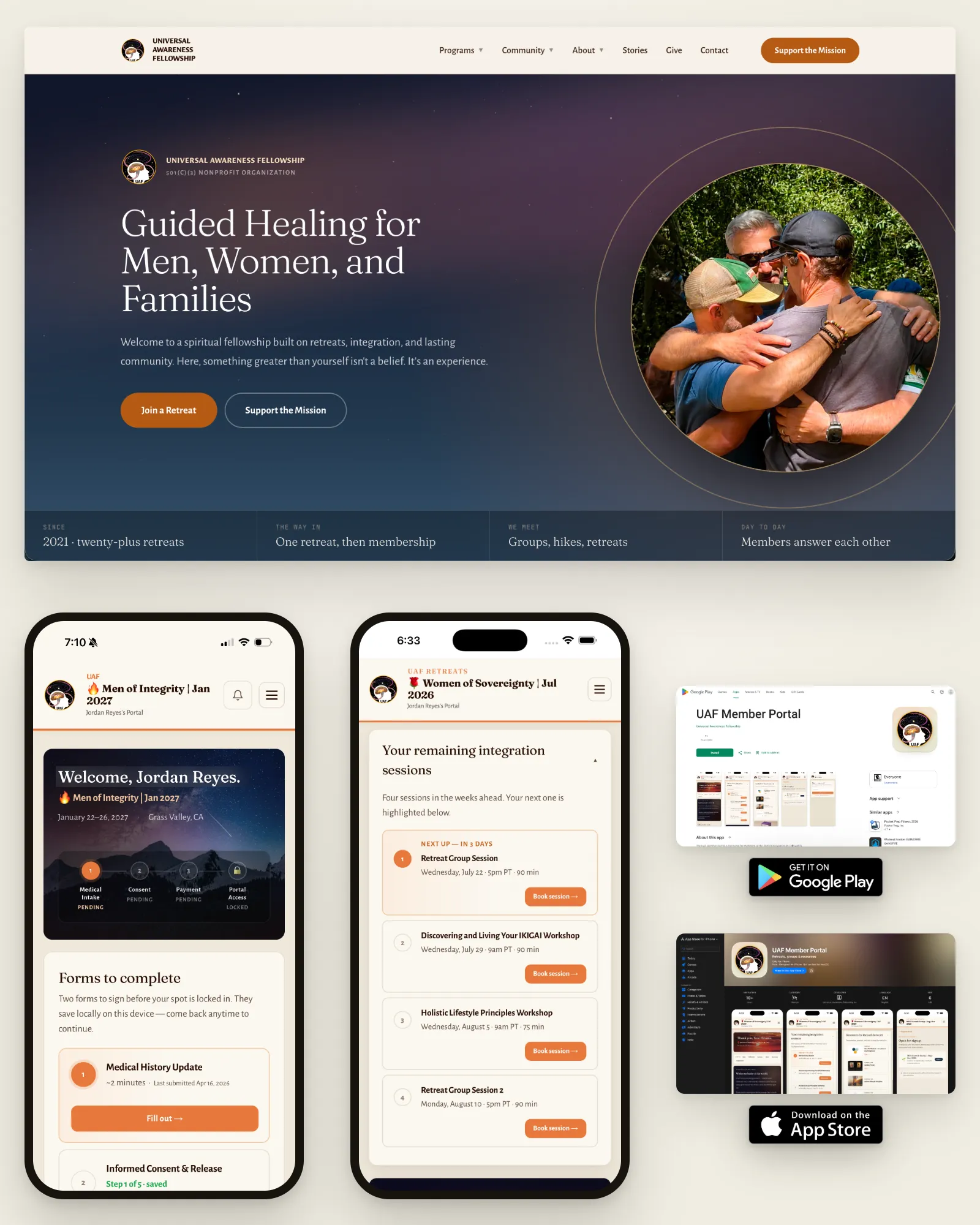
One environment, different interfaces for different people.
what the fellowship is, and how to begin
their own record, forms, programs and payments
the same portal, native on iPhone
the same portal, native on Android
A forms platform, not a form.
One health answer, from the moment the question is composed to the moment a designated medical reviewer clears it.
These are details most people should never have to think about. That is the point.
Shrugged Collective / Barbell Shrugged
Creating coherence across a rapidly growing media and education company.
When I began working with Shrugged Collective in 2017, Barbell Shrugged had already become one of the leading fitness podcasts of its era, and the company was expanding well beyond a single show.
audience alone
The organization's digital footprint was growing faster than its structure. That became the work.
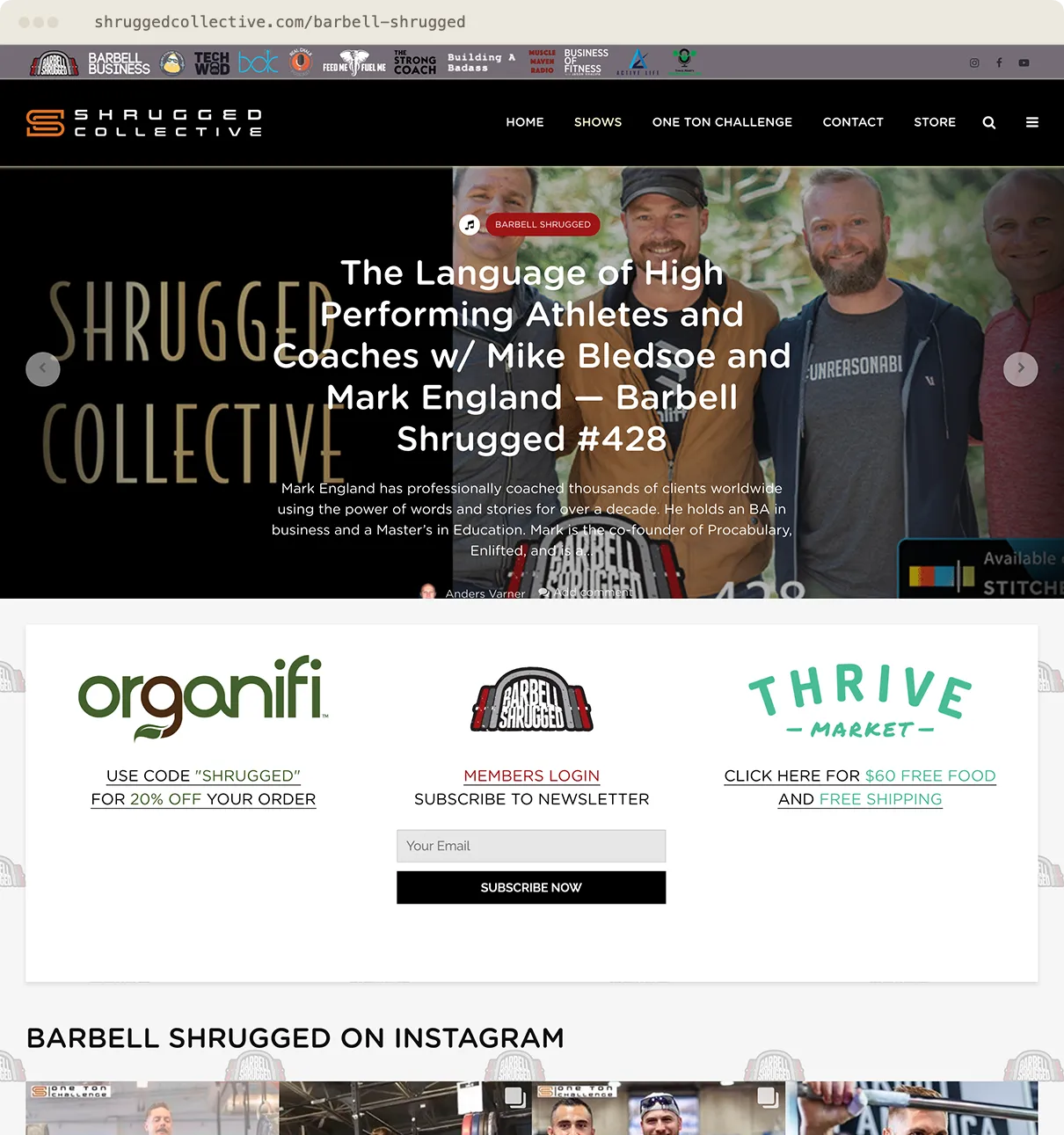
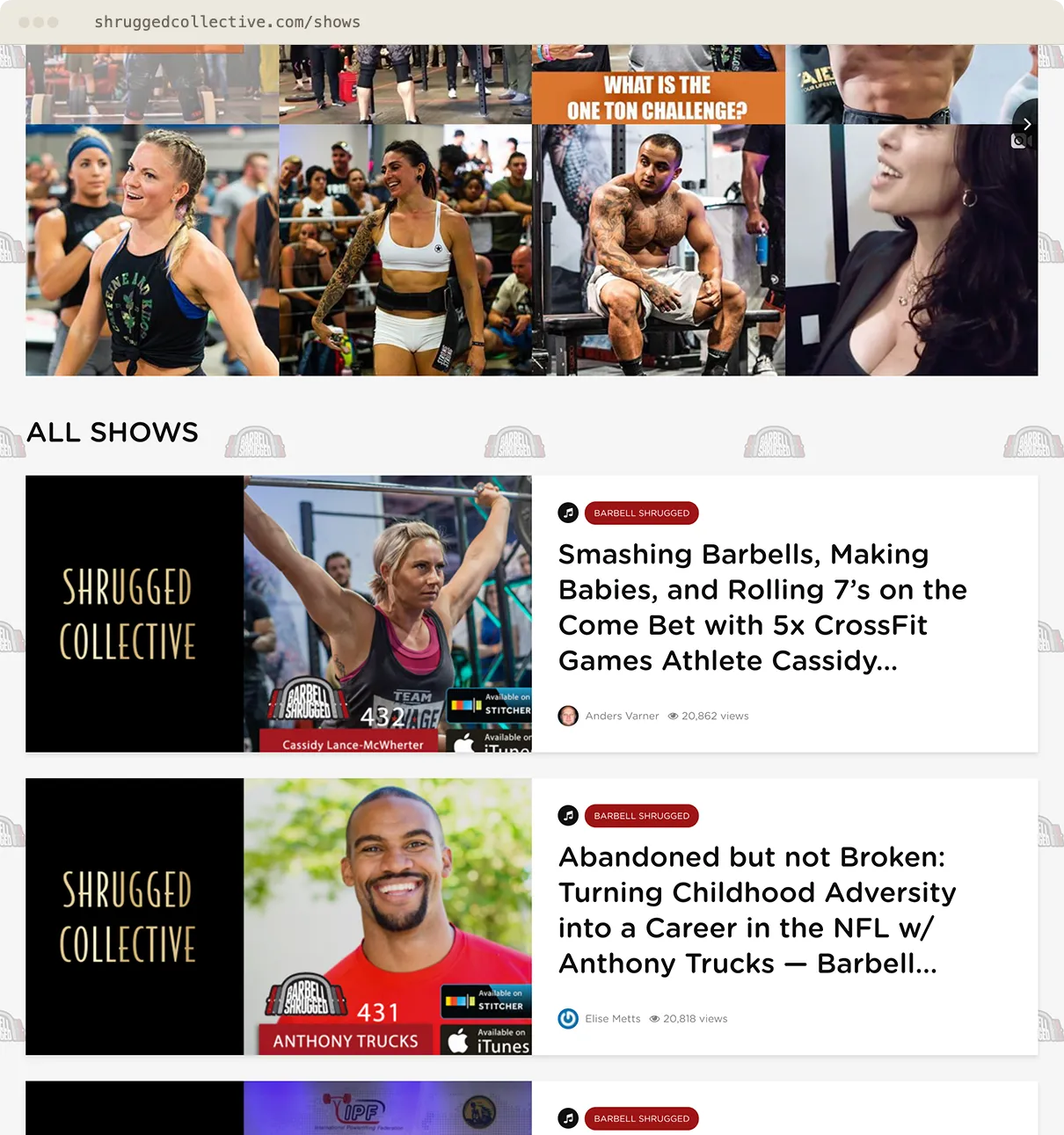
One company wearing thirteen faces.
A successful company had accumulated more brands, products, people, systems and audience relationships than any single generic tool could understand. Looking back, it was an early version of the work I do now.
thirteen properties, each with its own identity
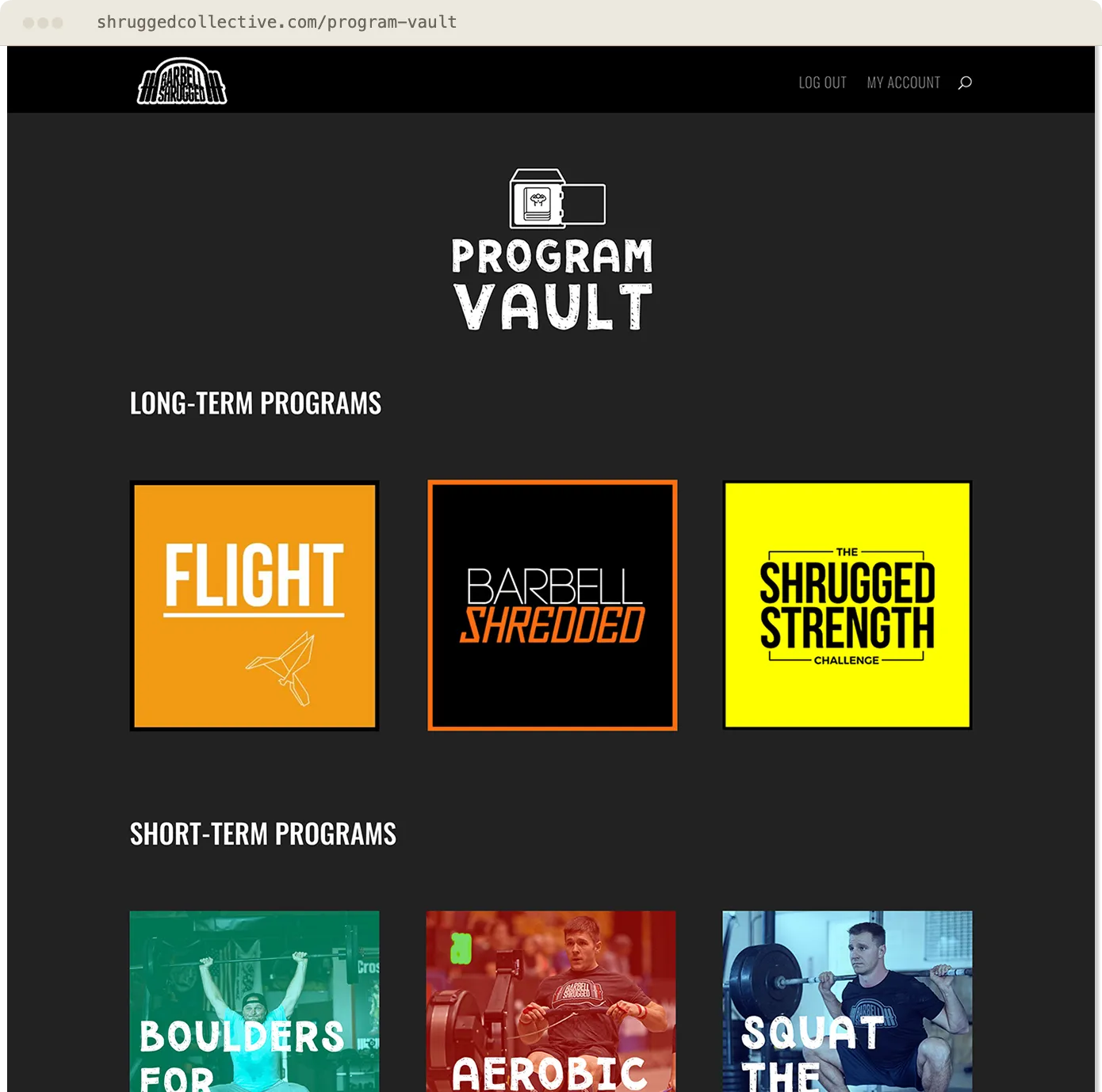
training programs built and launched on the same platform
one database, one place the mail came from
The real problem was not “How should this page look?” It was “How should this entire ecosystem work together?”
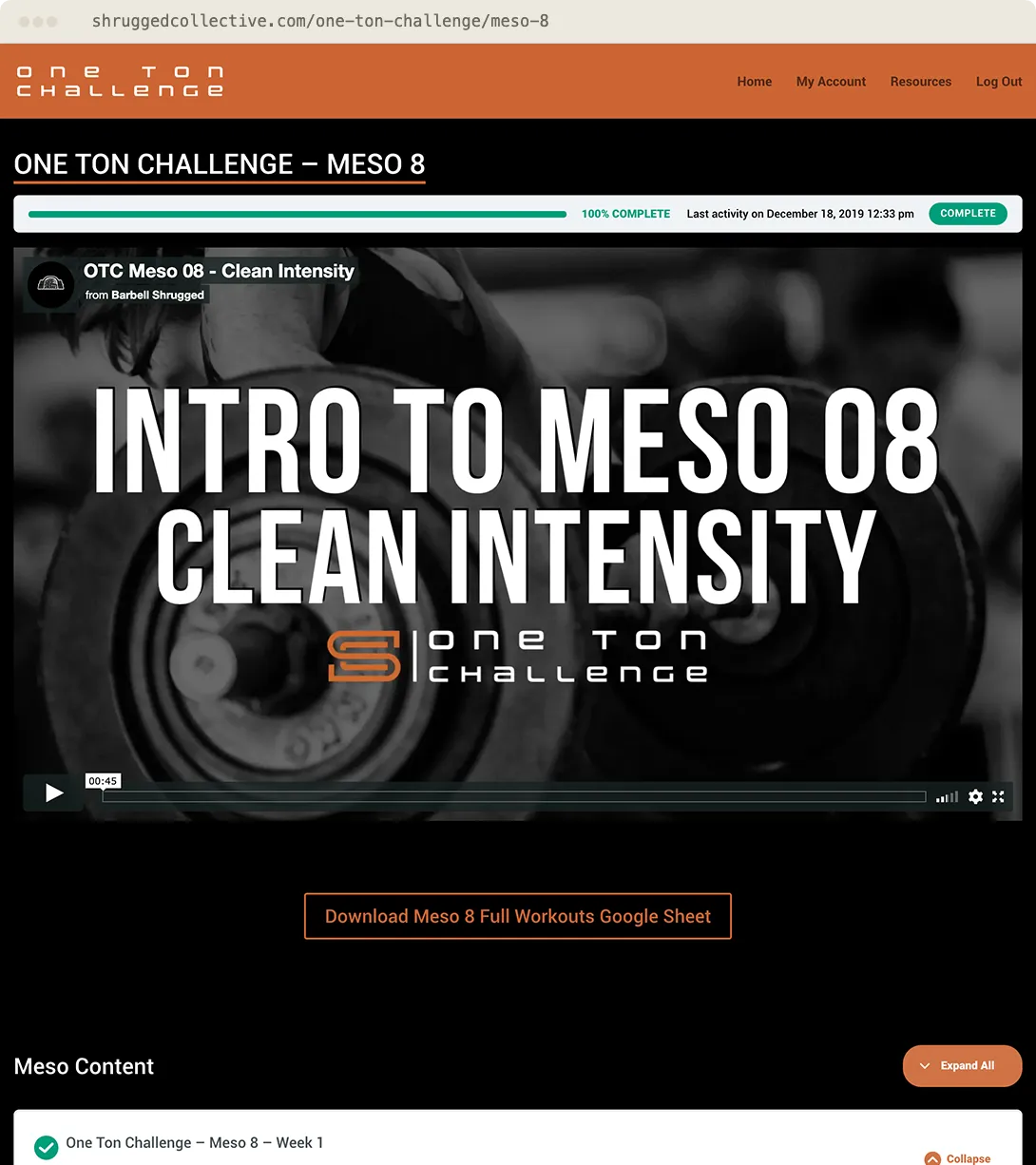
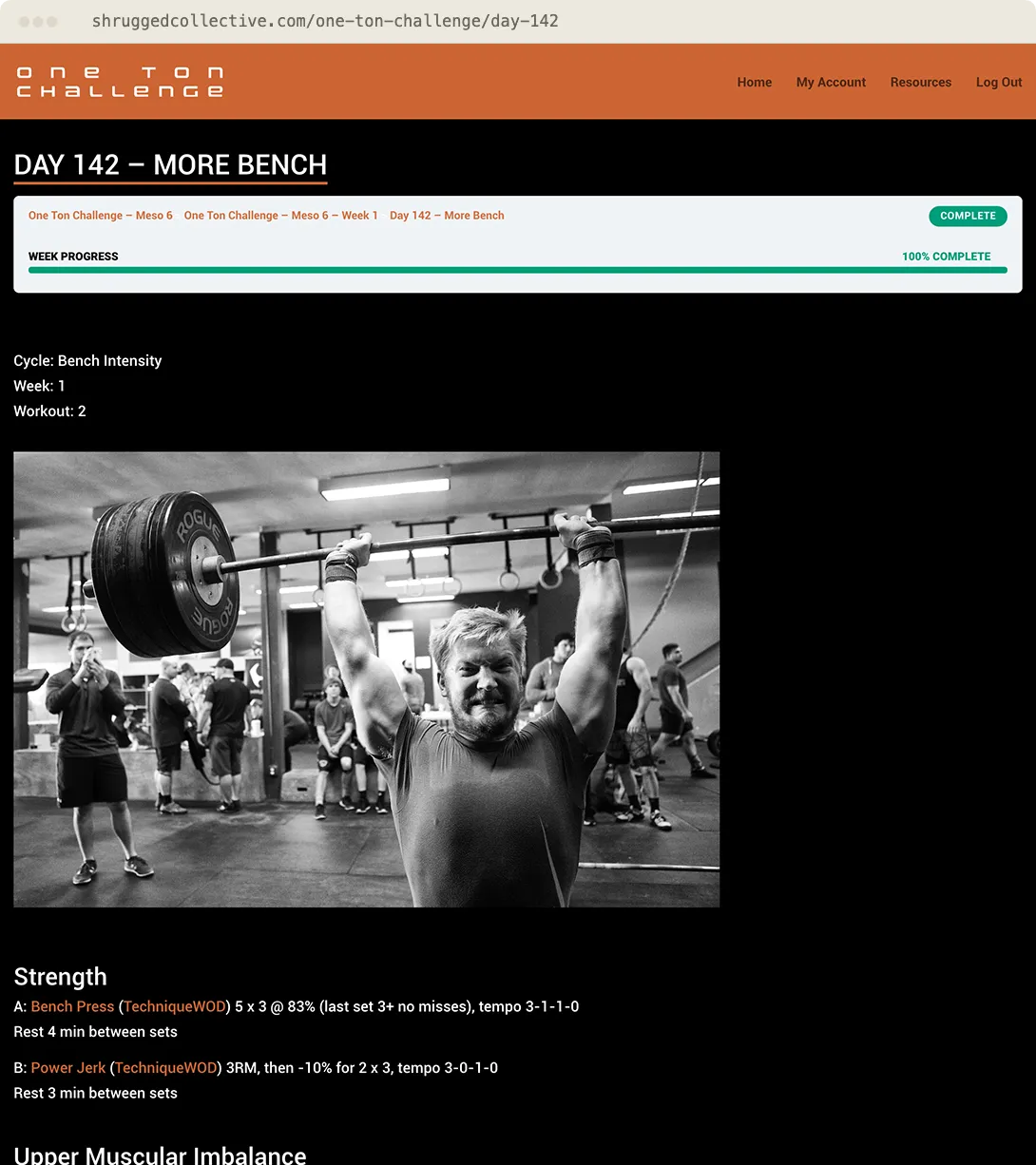
“Solflower has been there every step of the way... The best part really is the intangibles. They are constantly exceeding my expectations... I actually told Yoni I didn't want to write this because someone may read it and may end up taking his time away from my business.”
Other selected work
The Swig Company
Digital strategy, design, and development for an 80-year San Francisco real estate investment company with a multi-billion-dollar commercial portfolio. The work included digital experiences supporting sustainability and h3, Swig's workplace-experience initiative.
WorQFlow Solutions
An interconnected commissions and company-performance system built early in WorQFlow's growth, giving individuals visibility into projected commissions while giving leadership a consolidated view of company health and where attention was needed.
Have something that does not fit neatly inside a product category?
Good. Those are usually the interesting projects.